Enterprise Resiliency: The New Bottom Line
When disruption hits, most organizations ask, "How do we survive?" The more resilient ones ask, "How do we adapt—and come out stronger?"

Keith Laplante
Thirty-five years leading inside organizations (TD Waterhouse, BMO, HomeEquity Bank) and advising alongside them (Accenture, ExperiencePoint, The Refinery Leadership Partners). Facilitated leadership programs at Harvard, Duke, and Stanford. Read more about Keith
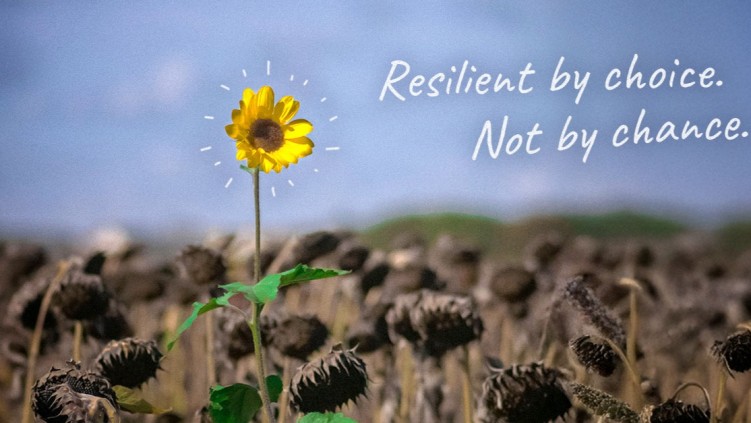
"Enterprise resiliency isn't about becoming indestructible; it's about becoming change-able."
July 22, 2025
When disruption hits, most organizations ask, "How do we survive?" The more resilient ones ask, "How do we adapt — and come out stronger?"
As we all saw, the COVID-19 pandemic disrupted life and business across the globe. It upended every convention we relied on. This was especially true in consulting (the space I was working in at the time), where face-to-face interaction was the foundation of our work. Practically overnight, we had to find new ways to engage with clients, deliver value, and support one another, all without the benefit of in-person connection. It was a daunting challenge (to say the least), but also a powerful catalyst.
Rather than freeze, our innovation team at Accenture embraced the uncertainty. We committed to learning our way forward, rapidly rethinking how we operated, experimenting with tools and processes, and helping others do the same. With a "start-up" mindset, we not only adapted, we thrived. We grew our team, deepened our impact, and became a source of resilience for others. This wasn't just survival; it was a demonstration of enterprise resiliency in action.
For those organizations willing to remain flexible, embrace ambiguity, and keep learning, even the greatest adversity can unlock unexpected opportunity. It's all about being resilient.
So, What Does Enterprise Resiliency Really Mean?
In nearly every client conversation I've had over the past few years, resiliency comes up — either as a question, a concern, or a goal. Today, it's not just important; it's urgent.
Essentially, enterprise resiliency is about an organization's capability to withstand disruptions, adapt swiftly, and maintain its value proposition despite external challenges. It's like having strong core muscles; setbacks may occur, but you can recover faster, stronger, and wiser.
According to a 2024 survey by Deloitte, 88% of global executives are focused on improving organizational resilience, yet only 36% are confident in their current ability to manage disruptions effectively. That gap should set off alarm bells. Additionally, the World Economic Forum's Global Risk Report highlights "persistent economic uncertainty," "cyber threats," and "extreme weather events" as some of the most likely and severe business risks in the near future. It's not a question of if your organization will face challenges, but when.
Still, I have really good news: resilience isn't a fixed trait. It's not something you're either born with or not — it can be built. In fact, some of the world's most innovative and enduring companies have made resiliency part of their cultural DNA, and there's a lot we can learn from how they did it.
How Leading Organizations Build Enterprise Resiliency
-
They prioritize adaptable systems over rigid plans: While traditional long-term planning remains important, resilient organizations focus on flexibility by building adaptable systems. This includes modular technology infrastructures, versatile teams, and decentralized decision-making processes. For instance, when they faced COVID-19, companies like Unilever quickly adjusted their supply chains to pivot towards health and hygiene products. This wasn't luck; it was flexibility by design.
-
They make learning part of their operating model: Resilient organizations view learning as a fundamental component of their structure. At Amazon, teams conduct "post-mortems" after every project, regardless of the outcome, to make quick improvements. Similarly, DBS Bank in Singapore trains employees in "sensemaking" and scenario planning to confidently navigate uncertainty. This agile learning builds institutional muscle memory that pays off when the unexpected hits.
-
They put well-being and culture first: It might sound soft, but it's not. Creating psychological safety and supporting well-being are concrete strategies. McKinsey research shows that companies with high levels of employee resilience and adaptability are more likely to outperform their peers and experience lower attrition rates. One study found that companies prioritizing performance management were 4.2 times more likely to outperform their peers. The bottom line is: resilience starts with people who feel seen, supported, and prepared — not burned out and overwhelmed.
-
They diversify their innovation bets: Resilient enterprises don't concentrate all their efforts on one research and development path. Instead, they experiment across different timelines, including short-term wins, mid-term improvements, and long-term ambitious projects. This approach, exemplified by companies like Google and Microsoft, ensures that when one project fails, another is already in progress.
How to Build Enterprise Resiliency in 2025: A Starting Guide
If you're leading (or helping lead) an organization that wants to be more future-ready, here are a few moves that can spark momentum:
-
Run a "resiliency audit": Look at your tech, talent, culture and capital through a resiliency lens. What's flexible? What's brittle? What's missing?
-
Build a culture of "What if?": Encourage teams to scenario-plan creatively and regularly. Make resilience a part of team conversations and not just executive strategy.
-
Invest in up-skilling for uncertainty: Future-proofing is not just about tech skills — you must also focus on adaptability, systems thinking, collaborative problem-solving, and innovation, too.
-
Treat change as a core capability, not a crisis response: Resilience isn't about weathering the storm, it's about learning to dance in the rain.
Looking to the Horizon: Preparing for the Next Wave of Disruption
If 2020 and the subsequent years taught me anything, it's that the pace of disruptions is not slowing down, but this doesn't necessarily spell doom. With the right mindset, today's uncertainties can open doors to tomorrow's opportunities. In consulting (and most other industries), we had to embrace the idea that the way we did things had, overnight, become the way we USED to do things. Adapting wasn't a choice; it was an imperative. Enterprise resiliency isn't about becoming indestructible; it's about becoming change-able. Make no mistake, the organizations that get that right won't just survive, they'll lead.